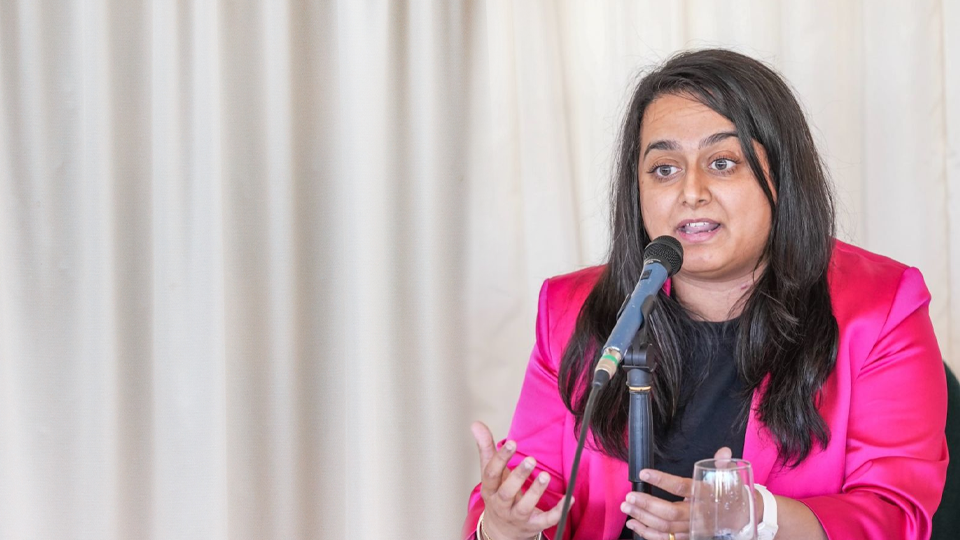






How Do I Know If Becoming a Coach Is Right for Me

How Do I Know If Becoming a Coach Is Right for Me?

By Kim Morgan

‘How do I know whether coaching is right for me?’ is a question we have been asked many times over the past 30 years, and the answer will be different for everyone. So, in true coaching style, here are some thoughts and practical exercises to help you decide for yourself.

As Barefoot’s founder, I have always believed in giving honest answers when people ask whether coaching is right for them, partly because the answer depends on so many factors and partly because there is no single route to take. Some people build full-time practices; many combine coaching with consultancy, facilitation, training, leadership development or another job; others use coaching skills in an existing role or in their personal lives.

Thousands of coaches have trained with Barefoot, and I have had the privilege of seeing where that learning has taken them. Many have continued to grow and flourish as coaches, adding new areas of expertise as their careers have developed. Some now work with us as Barefoot associates. Some have developed coaching companies, written books, completed masters degrees and PhDs in coaching, delivered TEDx talks, moved into senior leadership roles, created charities and social enterprises, and received awards for their work. Many others have built satisfying portfolio careers in which coaching is one important part of what they do.

If you are interested in exploring whether coaching is right for you, you will need an understanding of the options, demands and possibilities. These questions and exercises will help you gather evidence so that you can make a well-informed decision.

1. Have some coaching yourself

Before investing in coach training, experience coaching as a client. Notice what it feels like to be listened to with space to think and to arrive at your own answers. Pay attention to what the coach does and whether you are interested in learning to create that space for others.

Practical exercise: Experience Being Coached

Arrange some sessions with a professionally trained coach. Afterwards, note: What helped me think? When did I feel challenged? What did the coach do instead of advising? What felt energising or uncomfortable?

2. Understand what is involved
in working as a coach

Having an interest in people is a good start, but professional coaching requires a range of skills. A coach listens closely, builds trust, asks thoughtful questions, challenges respectfully and helps clients take responsibility. Coaches must also contract clearly, understand boundaries, behave ethically, engage in coaching supervision and keep learning.

Much of the work involves helping people think well and find their own answers rather than advising or consulting.

Practical exercise: Listen Without Fixing

Ask someone you trust to talk to you for five minutes about a decision they are considering. Listen attentively, demonstrate interest and ask open questions. Give no advice even if asked. Afterwards, ask yourself what you learned from that experience.

3. Research the realities of a coaching career

A coaching career can be meaningful, flexible and intellectually rewarding. It may also involve variable income, business development, administration, cancellations and quiet periods. Earnings for coaches vary according to market, experience, credibility, clients, pricing and the proportion of the week spent in paid coaching.

Build your plans around the full picture rather than an attractive hourly rate. Paid sessions also include preparation, follow-up, marketing, networking, learning, supervision and administration.

Practical Exercise: Speak to Coaches

Ask several practising coaches about how they became a coach, how they earn their living, how long it took to establish their work and what a standard week looks like for them.

4. Ask what level of uncertainty your life can accommodate

It is important to look at your relationship with money and risk. How much financial security do you need? What happens to your thinking when income or plans are uncertain? Consider how much time and energy you could give to training, practice and finding clients, and who else would be affected by a change in your circumstances.

You may decide to remain employed while you train, build experience and put money aside until you feel financially secure enough to make a change.

Practical Exercise: Your uncertainty budget

Score yourself from 1 to 10 for financial capacity, available time, emotional energy, support from those around you and your tolerance of uncertainty. For every low score, consider one action that would improve it: reduce expenditure, protect study time, talk with your family, delay a major change or retain reliable income.

5. Consider coaching alongside your
current role

Many people begin coaching part-time. It can sit alongside consultancy, facilitation, teaching, training, HR, leadership development or another profession. It can also strengthen current work: managers can hold better development conversations; HR and learning professionals can encourage ownership; consultants can judge when to offer expertise and when to help a client think.

Not every coach opts to be self-employed. For some people, incorporating coaching into an existing role is the destination, not a half-way house. The important question is whether the learning helps you do work that matters with greater skill and integrity.

Practical Exercise: Your Coaching Opportunities Map

Draw three columns: Current role, Part-time practice and Future possibilities. List realistic ways coaching could appear in each, such as one-to-ones, internal coaching, volunteer clients, private clients or work linked to your specialism.

6. Test the water before making a big leap

You can take a gradual route and still be serious about coaching. Attend taster sessions, speak to graduates as well as course tutors, and explore opportunities to practise in your current work. Research the clients you might like to work with, what they need and how they find coaches.

When you have worked through these questions and exercises, use the coaching readiness check below to take stock of what you know and identify anything you still need to explore.

Practical Exercise: A coaching readiness check

  • You have experienced coaching and understand how it differs from advice, mentoring, consultancy and therapy.
  • You are willing to practise, receive feedback and examine your habits and assumptions in training to become a coach.
  • You have researched credible training providers.
  • You understand the income, costs and time involved in building work.
  • You know how much uncertainty your circumstances can absorb.
  • You have considered part-time, portfolio, workplace and self-employed routes.
  • After all your research, you are still excited by the prospect of becoming a coach.


You don’t need to answer ‘yes’ to every point. The check highlights what to explore next, and your readiness will become clearer through experience, research and honest reflection.

So, is becoming a coach right for you?

It could be! If you are curious about people, interested in the psychology of change, willing to listen without rushing to fix, open to feedback and prepared to keep learning, coaching may suit you. Your route might be a new career, a small practice, a portfolio of related work or a more coaching-led approach to your current role.

And if coaching does turn out to be right for you, it can open doors you cannot necessarily see at the beginning. One of the pleasures of doing this work for more than 30 years has been watching people take their coaching skills into places, organisations, communities and areas of work that none of us could have predicted when they first walked into a training room.

The aim is to make a well-informed decision that respects your ambitions, values, responsibilities and the realities of the profession.

Frequently asked questions about coaching

How do I know coaching is right for me?
Experience coaching, learn what professional practice involves and test your interest through small experiments. Look for evidence that you enjoy listening, inquiry, challenge, reflection and continued learning.

Can I coach part-time?
Yes. Many coaches begin alongside another role, and coaching may remain one part of a wider portfolio career. A part-time route can provide income stability while you build skill, experience, credibility and a client base.

Is coaching a good career?
It can be rewarding, flexible and meaningful, but earnings, workload and opportunities vary. A sustainable coaching practice often takes time to build, and many coaches combine coaching with related work.

Can I use coaching in my current role?
Yes. Coaching skills can strengthen leadership, management, HR, learning and development, consultancy and other people-focused work. For some people, using coaching inside an existing role is a valuable outcome of training.

Should I leave my job to become a coach?
Build enough evidence before making a major career decision. Understand your finances, training commitment and likely route to clients, and consider building experience while keeping some reliable income.

Do I need previous coaching experience?
You do not need previous coaching experience to begin training. You do need a willingness to learn, practise, receive feedback and work to clear professional and ethical standards. Your existing work and life experience will also shape what you bring.

What should I do before choosing coach training?
Have some coaching, attend more than one taster, speak to graduates, compare the live practice and feedback offered, understand the professional pathway and check that the time and cost commitments are sustainable.

Enjoying these insights? Get more free tips and expert perspectives delivered straight to your inbox.

  SIGN UP NOW

Curious About Coaching?

Discover our coach training programme and experience coaching in action. Join a free taster session and see what’s possible in a safe, supportive, and no-obligation environment.

Book Your Free Taster

Leave a Reply

Your email address will not be published. Required fields are marked *

Kim Morgan

Posted on Google Google
Chris Goldson profile picture
Chris Goldson
Google star 1Google star 2Google star 3Google star 4Google star 5Trustindex verifies that the original source of the review is Google.
Barefoot more than lived up to its fantastic reputation when I experienced the course. My 5 months with them was one of the most significant and meaningful things I have done in my career of over 30 years. Solid and well planned content, exceptional tutors, and the chance to grow and learn alongside my wonderful cohort of fellow Barefooters. I've been able to bring valuable new skills to my business. Thank you!
Posted on Google Google
Carolyn Deveney profile picture
Carolyn Deveney
Google star 1Google star 2Google star 3Google star 4Google star 5Trustindex verifies that the original source of the review is Google.
I knew as soon as I found Barefoot that it was the organisation for me to train with. They share my values and ethos. They did not disappoint! The course was one of the most positive experiences of my life. The tutors, the integrity and care woven through like a golden thread, the approach, methods and thoroughness, amount of practice time, the cohort - all perfect. I left feeling well equipped to go out into the world to coach with a great range of tools and techniques under my belt, and a desire to develop more of my own. I have built lasting connections and relationships with some wonderful people. I enrolled on the post-grad certificate to further develop and fine tune my skills. I cannot recommend Barefoot enough. Thank you!
Posted on Google Google
Alison B profile picture
Alison B
Google star 1Google star 2Google star 3Google star 4Google star 5Trustindex verifies that the original source of the review is Google.
I have just found my ‘Barefoot Coaching’ coaching cards from 2012, they are so valuable even after 9 years!
Posted on Google Google
Duncan S profile picture
Duncan S
Google star 1Google star 2Google star 3Google star 4Google star 5Trustindex verifies that the original source of the review is Google.
An amazing 12 days with the Barefoot Team working on Personal and Business Coaching. The tutors are incredibly knowledgeable, the theory wide-ranging and the practical sessions varied and valuable. I'd recommend this course and the Barefoot Team to anyone.
Posted on Google Google
Sandra Whiles profile picture
Sandra Whiles
Google star 1Google star 2Google star 3Google star 4Google star 5Trustindex verifies that the original source of the review is Google.
I chose Barefoot to consolidate my training as a coach in 2016. Everyone I spoke to beforehand about coach training providers said that Barefoot was the only choice - and they were so right Great tutors and course materials. Brilliant challenge and support. Excellent venues. You are made to feel part of Barefoot from day one . Lots of folk have said it, but life changing is the only way I can describe my experiences with Barefoot.
Posted on Google Google
Andy Follows profile picture
Andy Follows
Google star 1Google star 2Google star 3Google star 4Google star 5Trustindex verifies that the original source of the review is Google.
I recently completed the taught modules of the Postgraduate Certificate in Business and Personal Coaching with Barefoot. I wanted to be exposed to a broad range of coaching ideas, to have plenty of time to practice coaching and receive feedback and to meet like minded people who shared my passion. I was not disappointed. I loved every minute of the modules and was sad when the programme finally came to an end. Our cohort has been amazing and we continue to engage with each other via webinars and get togethers organised by ourselves. At no point in the process did I have any feeling that Barefoot was interested in selling places on this or other programmes. It was all about getting a good fit between you as a coach and their offerings. Great people. Very professionally run. Great materials. A good range of tutors from different backgrounds. All delivered with wonderful warmth and passion. Can't recommend highly enough.
Posted on Google Google
Emma Kearin profile picture
Emma Kearin
Google star 1Google star 2Google star 3Google star 4Google star 5Trustindex verifies that the original source of the review is Google.
What an amazing program, it has changed my life, I didn't know what I was going to use the training for or how it would change things for me or the people around me. It has proved the best decision yet 😁
Posted on Google Google
Teresa Roberts profile picture
Teresa Roberts
Google star 1Google star 2Google star 3Google star 4Google star 5Trustindex verifies that the original source of the review is Google.
I trained with Barefoot Coaching and can highly recommend the course. The breadth of learning and approaches, together with the great tutors and a very supportive cohort of students allowed me to challenge my existing thinking and develop as a coach in a way that was authentic to me. Completing the essays for Chester University also offered the opportunity to underpin the experiential learning with some academic rigor. The Barefoot team are all warm, friendly people and a pleasure to be around.
Verified by Trustindex
Trustindex verified badge is the Universal Symbol of Trust. Only the greatest companies can get the verified badge who has a review score above 4.5, based on customer reviews over the past 12 months. Read more

Browse Our Courses

Two women sat having a coaching conversation during their Barefoot Training
ICF Level 2

ICF Accredited Coach Training

Develop your coaching skills with ICF Level 2 accredited training — blending tools, psychology, and practice, grounded in real coaching experience. Open to all backgrounds, with University of Chester options.

Office environment with trained Barefoot Coaches

Workplace Coaching

Our workplace coaching offer develops leaders and teams through practical tools, psychology, and real coaching expertise — building cultures of trust, resilience, and performance across every organisation.

A woman is sat on a leather back sofa. She is looking over at her colleague who is sitting to the left of her.

Leader as Coach

Our Leader as Coach programme equips leaders with coaching skills to inspire, engage, and empower. Blending theory with practice, it transforms everyday conversations into opportunities for growth.

A team of 6 sit around a table engaged in conversation. The man at the head of the able has his laptop open and one of the women at the table has a table. She is smiling as everyones eyes focus on her.

Team Coaching Practitioner Programme

This dynamic programme blends advanced learning on group and team dynamics with practical coaching experience — empowering you to coach teams confidently. Accredited with 40 ICF CCE points.

Guide to Grief and Loss

Certificate in Coaching for Grief & Loss

This pioneering programme builds the skills, insight, and empathy to coach clients through grief and loss in all its forms. Accredited with 40 ICF CCE points.