




Picture this: you’re in the shower. For a few quiet minutes, no one needs anything from you. Then your knees buckle. Your chest tightens. You can’t breathe. Your vision blurs. You feel sick.
This is what parental burnout felt like for me.
I was one of many women carrying what Professor Leah Ruppanner describes as an “invisible, boundaryless and enduring” mental load. A 2026 Deloitte UK survey found that 66% of working mothers reported feeling burnt out, compared with 47% of working fathers.
For me, it was a sick baby, an energetic toddler and a daily life that required me to keep going long after my body said, “I quit.”
This burden is not limited to mothers. A 2026 Office for National Statistics study found that women spent an average of 3 hours and 32 minutes a day on unpaid work — 57 minutes more than men. Women without children can also face intrusive, insensitive questions about why they are childless.
So how can coaches support women carrying this often-invisible burden?
1. Coach the real issue
No amount of coaching can remove the unseen pressures of work, family, caring, illness, money or the endless list of invisible tasks.
Sometimes a situation feels too much because it is too much. The ethical response is not to help someone tolerate the intolerable, but to help them see what they are carrying, recognise their strengths and identify what support or change may be needed around them.
A useful starting point is: are we coaching the real issue?
2. Stop calling women ‘Superwoman’
Avoid labels such as “Superwoman” and be cautious with praise. These labels may sound affirming, but they can reinforce the idea that women can, and should, do it all.
Ivana Stulic, psychologist, coach and author of 100 Faces of Motherhood, offers a useful reframe: instead of applauding women for carrying so much, get curious. Ask: How are you? What are you carrying? What might help?
She shares a coaching model: Acknowledge, Empower, Focus. Acknowledge the pressure with deep listening; empower through choice, self-compassion and strengths; then focus on what can be reduced, shared, stopped, delegated, renegotiated or made “good enough”.
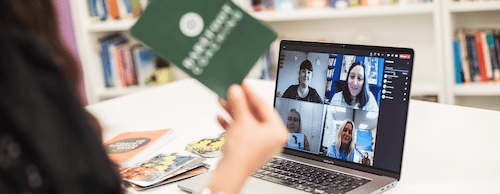
You can watch a webinar with Ivana here.
3. Question bias, including your own
Coaches may notice bias in the client’s context and in their own assumptions. Get curious about the beliefs shaping what the client expects of herself — and what you may be unconsciously reinforcing.
Ivana suggests inviting clients to explore beliefs around the following:
- A good mother should…
- A good manager should…
- A good partner should…
- A successful woman should…
- Asking for help means…
4. Focus on safety over tools
Bias can be deeply internalised, and clients may struggle to name what feels wrong.
Psychological safety matters more than any coaching tool. Rapport, empathetic listening, and trust create the conditions for exploring deep-seated beliefs.
Here, Ivana emphasises that Acknowledge, Empower, Focus is not a tick-box exercise. The Acknowledge stage requires time: listening, reflecting, and being prepared to return to what has not yet been fully heard.
5. Tune into the body
Somatic work may not be right for every client, but it can help many access information that is not available to them in words.
Burnout may arrive before language does. A tight chest, shallow breath, nausea, numbness or dizziness should not be ignored. Coaches can create a judgement-free space to explore what is happening, while recognising the limits of their competence and signposting to appropriate professionals where needed.
6. Let the invisible become visible
Often the breakthrough comes when women see for themselves that they are not failing to cope; they are carrying work that has gone unseen. Coaching can create space to pause, notice and name both the visible and invisible loads.
Coaching is not telling women what is happening to them, but inviting reflection so they can recognise it for themselves.
7. Acknowledge the system
Women are often placed in a bind: collaborate, but don’t be soft; be decisive, but not forceful; be authoritative, but approachable. The “ideal worker” norm adds another layer, assuming unlimited availability and a life organised around work.
Coaches can help clients notice these assumptions without creating a “Henry Higgins effect”, where women are implicitly encouraged to adapt to systems designed around men rather than question those systems.
If a woman questions whether she is “leadership material”, it may not be a confidence issue. Good coaching helps separate external messages from personal values and capability, while exploring support, boundaries and choices. Coaching is not just about individual change but also acknowledging the system in which they operate. Constellation coaching can offer a powerful reframe here.
8. Watch for self-blame and over-responsibility
Women often arrive in coaching carrying systemic pressure as personal failure: “I am not organised enough”, “I am too emotional”, “I need more confidence.” A coach can pause before accepting this and ask: what else might be operating here?
Useful questions include: What are you carrying that others may not see? What is yours to hold, and what has been inherited, absorbed or handed to you? What boundary might help? What needs to be shared, named, renegotiated or made visible?
9. Support men to be part of the change
A coaching lens sees men as part of the solution. Supporting women is not anti-men; equity is not a zero-sum game. When care is shared fairly, women are less depleted, men are less excluded from family life, children benefit from involved caregiving and workplaces gain healthier teams.
In coaching, this might mean exploring how responsibility is shared, how communication happens at home or work, and how male allies can use their influence positively. It means taking men’s physical and mental wellbeing seriously too, not framing equality as women’s work alone.
10. Support agency
Coaching should support meaningful change, not leave women trapped in hopeless rumination. The aim is to strengthen agency: helping women notice what is possible, identify what support is needed and take realistic steps towards a more sustainable future.
This might mean inviting the client to set a manageable boundary, renegotiate expectations or recognise that their current load was never meant to be carried alone.
Professor Leah Ruppanner is a sociologist and author of Drained: Reduce Your Mental Load to Do Less and Be More and Motherlands: How States Push Mothers Out of Employment. She explains the invisible mental load involves:
- Life organization: Staying on top of planning and tasks
- Emotional support: Checking in on family, friends, and coworkers
- Relationship hygiene: Maintaining strong social connections
- Magic making: Carrying on traditions and creating special life moments
- Dream building: Helping others fulfill their passions and ambitions
- Individual upkeep: Keeping fit and healthy
- Safety: Protecting family and loved ones from danger
- Meta-care: Raising children who will thrive in the future
Five self-reflective questions for clients managing invisible loads
- What am I carrying that others may not see?
- What is genuinely mine to hold, and what have I inherited, absorbed or been handed?
- Where might I be interpreting systemic pressure as personal failure?
- What would change if I asked for support before reaching crisis point?
- What could be reduced, shared, stopped, delegated, renegotiated or made “good enough”?
References and further reading
Research:
Cambridge University Hospitals NHS Foundation Trust. (2023, March 9). Childbirth pain relief study reveals inequalities for BAME mothers. https://www.cuh.nhs.uk/news/childbirth-pain-relief-study-reveals-inequalities-for-bame-mothers/
Deloitte UK. (2026, June 4). The unequal burden: UK working mothers bear brunt of parental stress and burnout. https://www.deloitte.com/uk/en/about/press-room/the-unequal-burden-uk-working-mothers-bear.html
Books:
Criado Perez, C. (2019). Invisible women: Exposing data bias in a world designed for men. Chatto & Windus.
Ellingrud, K., Yee, L., & del Mar Martínez, M. (2025). The broken rung: When the career ladder breaks for women—and how they can succeed in spite of it. Harvard Business Review Press.
Ruppanner, L Drained: Reduce Your Mental Load to Do Less and Be More (2026) and Motherlands: How States Push Mothers Out of Employment (2020)
Sieghart, M. A. (2021). The authority gap: Why women are still taken less seriously than men, and what we can do about it. Doubleday.
Stulic, I. (2025). 100 faces of motherhood. Mozaik knjiga.